


Understanding Stellest® Lenses: A Modern Approach to Myopia Control
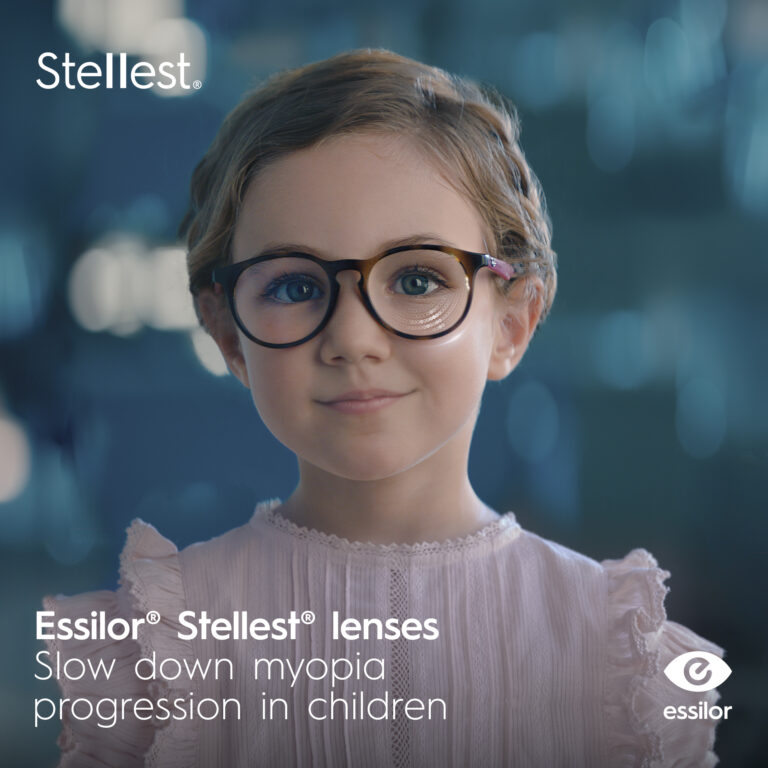
Myopia, also known as nearsightedness, is becoming increasingly common in children around the world. If your child’s prescription seems to get stronger every year, you’re not alone—and there are proactive options available. One exciting and new advancement in this area are Stellest® lenses, developed by Essilor, which are designed specifically to help slow the progression of myopia in children.
What Is Myopia (and Why Does It Matter)?
Myopia occurs when the eye grows too long from front to back, causing distant objects to appear blurry. While glasses or contact lenses can correct blurry vision, traditional lenses do not slow the underlying eye growth, aka “myopia progression”. Progressive myopia matters because higher levels of nearsightedness are associated with increased lifetime risks of eye diseases such as retinal detachment, glaucoma, and myopic macular degeneration later in life. Even 1D (diopter) of myopia increases risks for myopic complications later in life!
That’s where myopia control comes in.
What Is Myopia Control?
Myopia control refers to treatment strategies aimed at slowing down the progression of nearsightedness, not just correcting vision. These strategies include specialty contact lenses, atropine eye drops, and specially designed glasses lenses like Stellest® and MiyoSmart. The goal is simple: help keep prescriptions lower over time and protect long-term eye health.
How Do Stellest® Lenses Work?
Stellest® lenses look like regular glasses, but their technology is anything but ordinary. They use a unique optical design that combines:
Clear central vision for everyday tasks like reading and schoolwork
Special lens elements in the periphery of the lens that gently alter how light focuses on the retina
This peripheral design sends a signal to the eye that helps slow excessive eye growth, which is the root cause of myopia progression. Importantly, children adapt quickly, and most report clear, comfortable vision throughout the day.
Who Are Stellest® Lenses Good For?
Stellest® lenses are an excellent option for:
Children with progressing myopia
Kids whose prescriptions have increased by –0.50 diopters or more per year
Families looking for a non-contact-lens option
Children who may not be ready for contact lenses or nightly treatments
Because they are worn just like regular glasses, Stellest® lenses are often easier for children and parents to manage consistently.
What Age Range Is Best?
Stellest® lenses are typically recommended for children ages 6 to 13, which is the period when myopia tends to progress the fastest. Starting earlier—once myopia is diagnosed—can make a meaningful difference in slowing progression over time. However, some older children and teens may still benefit depending on their rate of change.
Do Stellest® Lenses Really Work?
Clinical studies have shown that Stellest® lenses can slow myopia progression by around 60% on average compared to standard single-vision lenses when worn full-time. Like all myopia control treatments, results depend on consistent daily wear and regular eye exams to monitor progress. However, it should be noted that myopia control is NOT meant to “reverse” myopia, but to slow its progression.There is no treatment that can “cure” or “reverse” myopia, but myopia CAN be controlled.
What to Expect as a Parent
Your child will still need annual or semiannual eye exams
Prescriptions may still change—but more slowly
Stellest® lenses are worn during the day like normal glasses
They can be combined with healthy visual habits, such as outdoor time and limiting prolonged near work
Sometimes, kids report vision can appear mildly blurry with the Stellest lenses during the first 1-2 weeks of wear. This is normal & will improve with time.
The Bigger Picture
Myopia control isn’t about perfection—it’s about risk reduction. Slowing myopia progression, even modestly, can significantly reduce the likelihood of serious eye problems later in life.
If your child has been diagnosed with nearsightedness or their prescription keeps increasing, Stellest® lenses may be a smart, science-backed option to consider. Talk with your eye care provider about whether they’re a good fit for your child and how they fit into a personalized myopia management plan.
Clear vision today—and healthier eyes for the future—starts with informed choices. Schedule your appointment today with us here at Express Vision!


At Express Vision - Southwest, We provide the highest quality optometry services and compassionate eye care to ensure you and your family is healthy and happy.
© 2026 Express Vision - Southwest. All Rights Reserved. Accessibility Statement - Privacy Policy - Sitemap
